



Many companies, including Hubspot and Zendesk, utilize CloudFlare to quickly upload their websites to a global audience and secure their servers from cyber threats.
The service, established in 2009, attracted investors’ interest and quickly became essential for millions of websites. CloudFlare now caters to websites of all scales, providing security and performance enhancements.
Continue reading to find out more and learn about CloudFlare and its usage.
- What does CloudFlare refer to?
- For what reason
- Benefits
- For those mentioned
- How the process functions
- Configuring CloudFlare for a website
- Panel of Directors
- How many
- Conclusion
What is CloudFlare?
CloudFlare offers website protection and optimization services that go beyond a traditional CDN, with the possibility of using a third-party CDN in conjunction. Some media outlets have referred to CloudFlare as the “next generation of CDN.”
One of the standout features of CloudFlare is its wide range of capabilities.
- Protecting against Denial of Service (DoS) and Distributed Denial of Service (DDoS) attacks.
- Content distribution network (CDN);
- Data encryption and issuance of SSL certificates (HTTPS).
- Firewall designed for web applications.
- Image improvement.
- Load Balancing;
- HTTP/2 and SPDY are related technologies.
- Customized caching regulations;
- Pages and domains redirection.
- And many more!
Cloudflare’s offerings
CloudFlare is commonly utilized to enhance the speed and safety of websites and applications. In the early days of the internet, content delivery was solely reliant on hosting servers. Despite this traditional method still being in use by many websites, situations of heavy traffic can overwhelm a single hosting server.
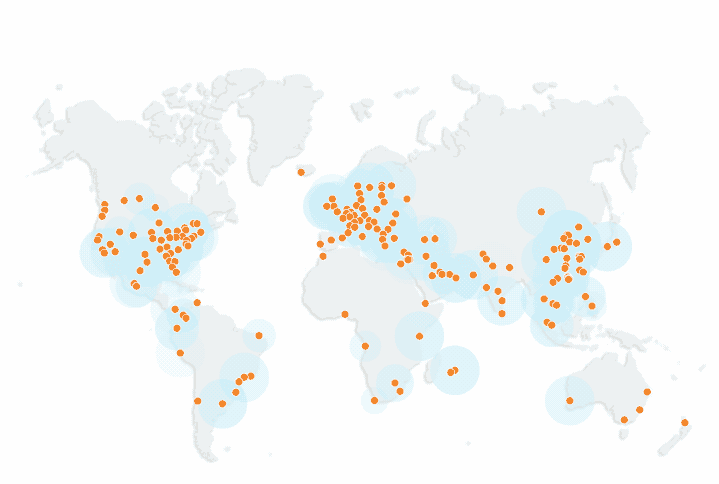
CloudFlare operates approximately 200 data centers globally to address such issues. As a result, visitors from Japan can access a website’s content swiftly, despite the server being situated in the United States. The CloudFlare network currently handles more than 1 billion users’ traffic daily.
CloudFlare is designed to safeguard websites from all types of denial of service attacks, such as distributed (DDoS) or not (DoS). It can detect and prevent malicious traffic, ensuring that legitimate users can access the site without interruption.
The service provides additional resources to enhance website loading speed and cater to the diverse requirements of advanced users, as we will explore further.
Benefits of utilizing CloudFlare
Main benefits of implementing CloudFlare on a website.
Increase in speed
Users appreciate the fast loading speed of pages provided by CloudFlare’s reverse proxy system, which efficiently responds to user requests and improves performance with its cache system. Every millisecond counts on the internet.
Enhanced security measures and safeguarding of the premises
CloudFlare provides strong security for websites by automatically managing traffic, blocking malicious bots and invasion attempts, and offering protection against DoS attacks. Users can easily activate protection with a single click on the control panel when their site is under attack.
Infrastructure spending reduction
CloudFlare’s service package helps decrease resource usage on the hosting server, potentially leading to cost savings by postponing upgrades and the need for extra services.
Site information visibility
The visibility of the site allows for observing audience behaviors and developing custom strategies to address various situations.
The service was initially developed with a focus solely on security and spam protection, with performance improvements being an unexpected positive outcome that users appreciated and that later became an integral part of the company’s offerings.
For those mentioned
CloudFlare is ideal for individuals or businesses with websites looking to enhance performance and security. This encompasses static websites, content management systems like WordPress and Joomla, hosted online stores such as Magento, web applications, and more.
CloudFlare is not compatible with websites created using existing hosting tools like Wix, Blogger, and WordPress.com.
CloudFlare provides unique features for managing domain DNS, including redirecting domains and pages without requiring website hosting.
The company frequently introduces new features within its system, making it impossible to discuss all CloudFlare applications in this article. For a comprehensive list, please visit the company’s website.
CloudFlare’s Functioning
The CloudFlare server network is positioned between the user and the hosting server, serving as an intermediary for all site requests.
This system permits only authorized visits by genuine users and harmless bots to access the website. Malicious bots, mass attacks, or invasion attempts are automatically blocked by CloudFlare servers without affecting the hosting server.
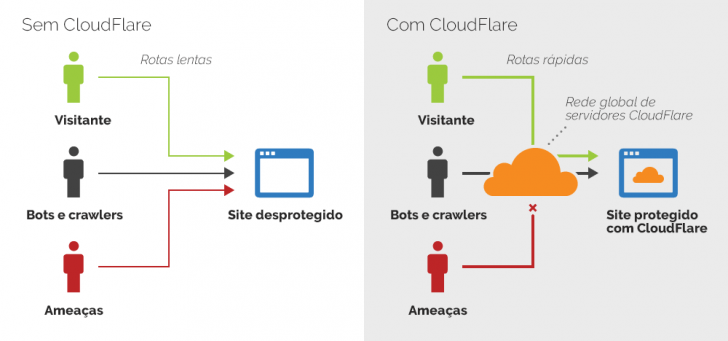
CloudFlare’s global network of 151 data centers ensures that visitors are connected to the nearest server physically. This allows CloudFlare to quickly deliver cached content without having to route the request to the original server, resulting in faster loading times.

If the website’s content is not cached, CloudFlare can still send the request to the source server using a quicker route, often faster than without this feature. CloudFlare also saves the requested resource for future access, delivering subsequent requests through the cache when feasible.

Configuring CloudFlare for a website
Setting up CloudFlare on a website is straightforward and does not necessitate technical expertise or coding modifications.
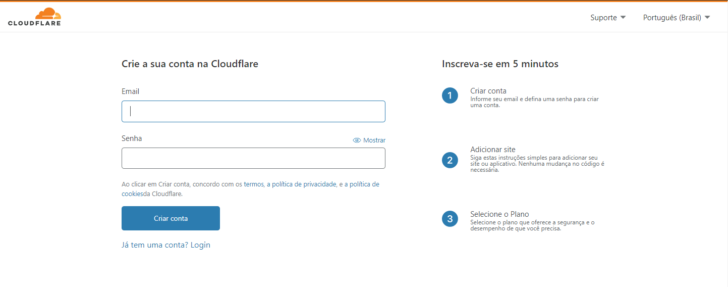
To begin, you need to register for a free account on the platform. Visit the website and select Sign Up or Sign In at the top of the page. Fill out the form with your email and password, then click on Create Account.
Enter the website domain you wish to set up on CloudFlare in the following step (e.g. mysite.com.br).

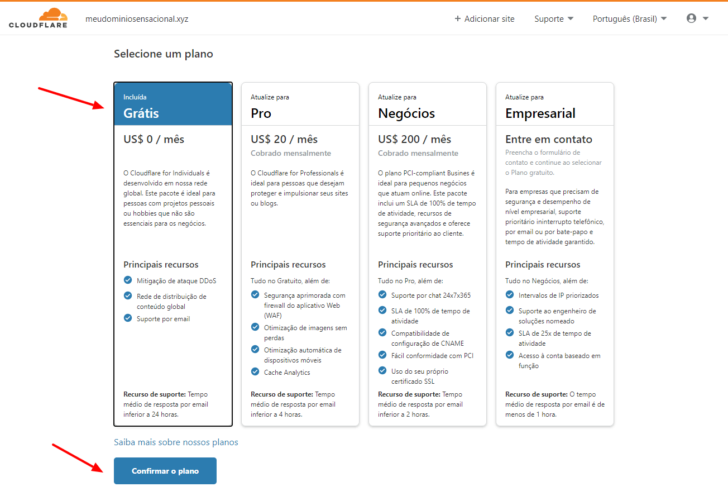
We will select the free plan on the plan choice screen, as it provides adequate features for most websites. Opting for the free plan when setting up CloudFlare for the first time is recommended, as it offers essential performance enhancements and protection. You can always switch to a different plan later on if needed.
After selecting a plan, you have the option to check the DNS records identified by CloudFlare and include additional ones if desired. Additionally, you can specify if you want specific entries, like subdomains, to bypass CloudFlare’s services.
If the cloud appears orange, it indicates that the address is utilizing CloudFlare. A gray cloud signifies that the address is bypassing CloudFlare and going directly to the hosting server. The primary domain typically goes through CloudFlare, while other entries like the FTP address can be directed straight to the server. The system will automatically recommend which entries should or should not pass through CloudFlare, so there’s no need for concern if you prefer not to manage it.
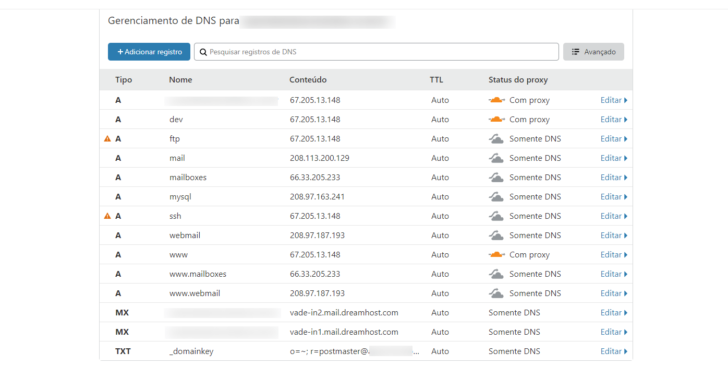
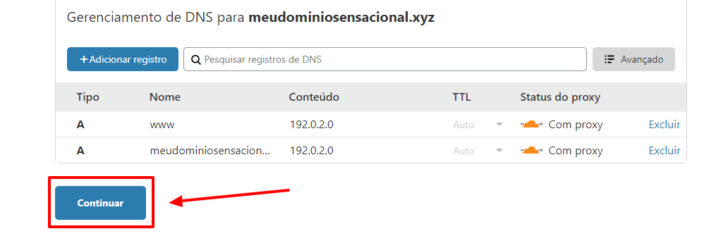
CloudFlare can detect all DNS entries set up for the domain. To manually review them, access your hosting’s administration panel, verify the records, and then click the “Continue” button.
chsyys/Flickr
One of the key screens for configuring CloudFlare shows the nameservers, which indicate where to direct your domain’s DNS entries. To finalize the setup, visit the dashboard of the company where you registered and manage your domain, then update the DNS values with those provided by CloudFlare.
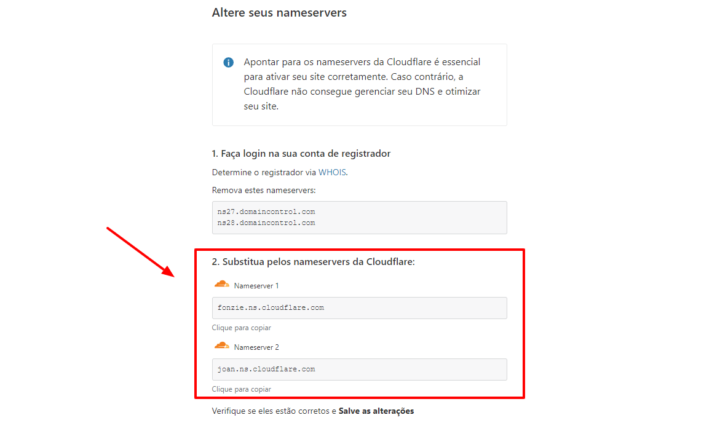
After making this adjustment, your website traffic will be directed to CloudFlare servers instead of your hosting server. If you are unsure about the company responsible for managing your domain, you can utilize a Whois tool to identify them.
Your website will not go offline during a DNS change process, which can take up to 72 hours to fully take effect across the internet. Rest assured that your site will remain accessible as the hosting server continues to operate normally.
After completing the DNS setup, you can select “Continue” to access the CloudFlare control panel.
The DNS status is shown on the screen. If the change has not been fully implemented, the status will be pending with a message indicating that the DNS change has not been recognized. CloudFlare typically takes about 24 hours to detect DNS changes due to propagation.
A warning will appear on the control panel homepage once the system detects that the DNS is directed to CloudFlare servers.
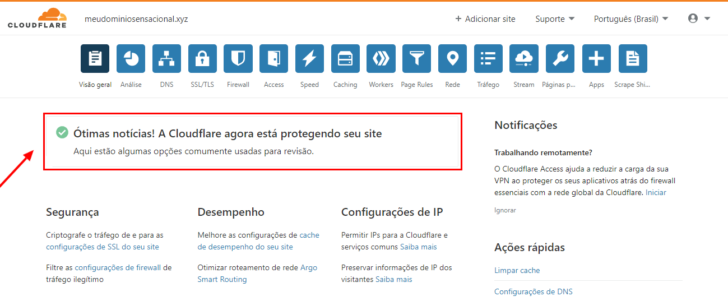
Shortly after the initial setup, access to the CloudFlare admin panel is available. Let’s explore the details of this panel.
CloudFlare Control Panel
The CloudFlare admin panel includes all features offered by the service, including those not included in your current plan. If such features are accessed, a notification will prompt an upgrade to gain access.
We won’t delve into every detail of each feature due to their abundance, but let’s quickly review the main ones below.
Summary
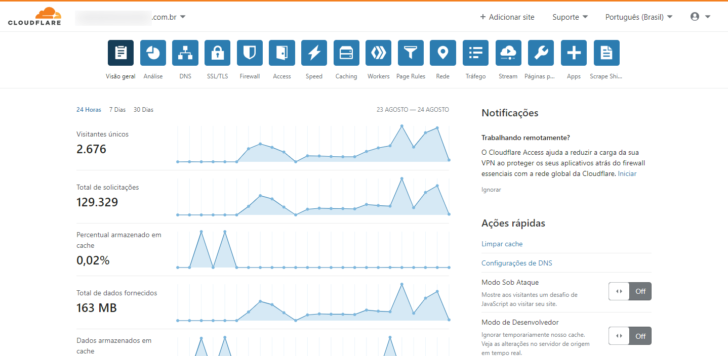
This is the initial choice on the dashboard and provides an overview of your account, showing CloudFlare status (which can be paused or resumed anytime), usage data, and a domain summary (SSL and cache level), along with other details. You have the option to modify your selected plan from this page.
Analysis
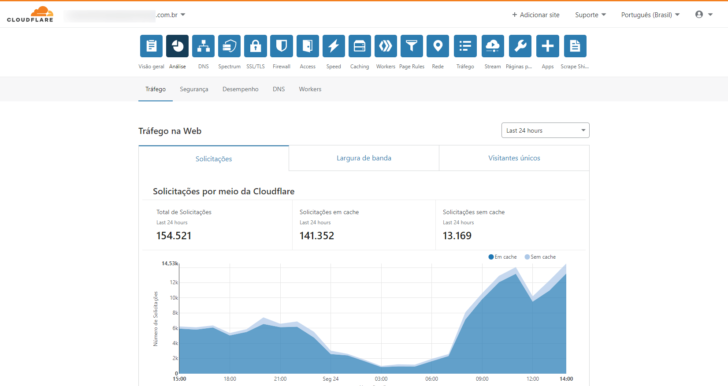
The Analysis screen provides a summary of the traffic data for your website and the utilization of CloudFlare. It shows details such as the number of requests handled by the CloudFlare cache versus those directed to the hosting server.
The screen also shows a summary of CloudFlare’s performance, indicating the number of requests saved by your server, the threats averted, and the HTTPS traffic served, in addition to other information.
Domain Name System
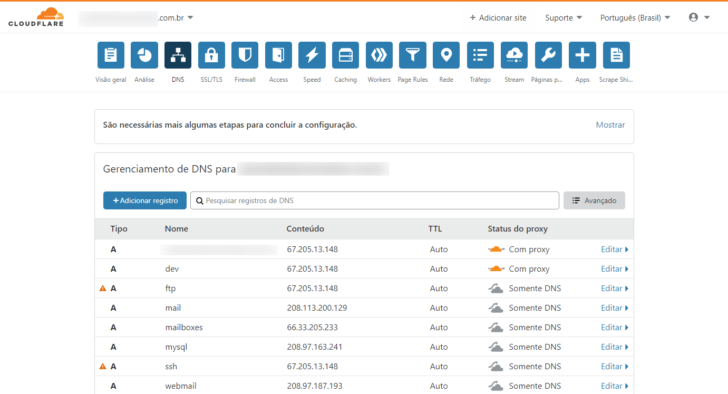
The DNS screen shows all current records in the DNS zone of your domain. This is where you can control the DNS entries for your domain after switching to CloudFlare. You can add, delete, or modify entries here, as well as create subdomains or set up professional email addresses if needed.
SSL/TLS protocol
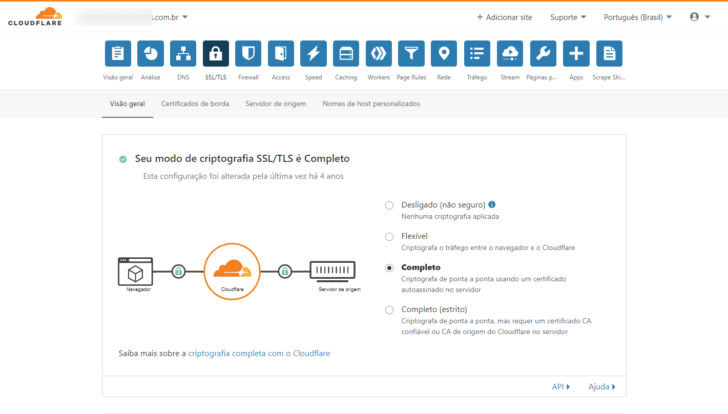
This is where you can manage encryption settings for your domain and the data transmitted between the server and users. You can choose the encryption level for your website and access other advanced features. You can also enable a free SSL certificate provided by CloudFlare from this section.
Firewall – A system designed to protect a network by controlling incoming and outgoing network traffic based on an applied rule set.
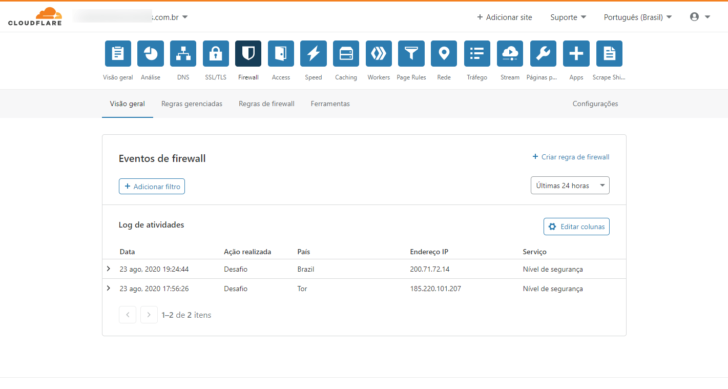
The Firewall tab is a valuable tool for safeguarding the website and detecting potential attacks. CloudFlare’s system proactively blocks various attacks, but users can manually block specific IPs causing server overload and adjust the security settings for the site in this section.
Velocity
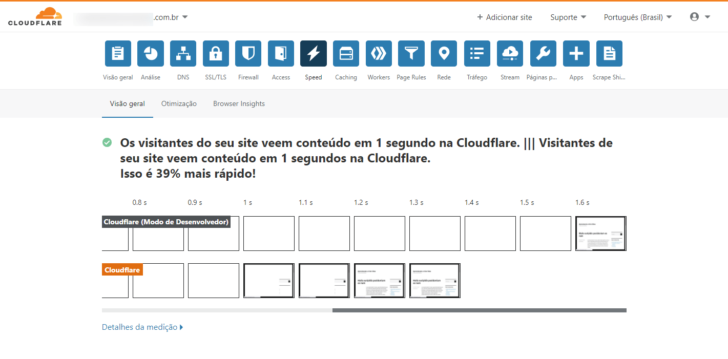
The Speed feature is particularly appealing for individuals seeking to enhance a website’s performance and loading speed. It allows users to enable functions like script compression, automatic image optimization, and the Rocket loader feature developed by CloudFlare to expedite page loading. Please be aware that some features are restricted in the free plan.
Storing data for future use
chsyys/UnPlash

The caching feature is valuable for refreshing content on your site and ensuring users see updated information by clearing the cache and setting cache preferences.
Page Regulations
chsyys/Burst
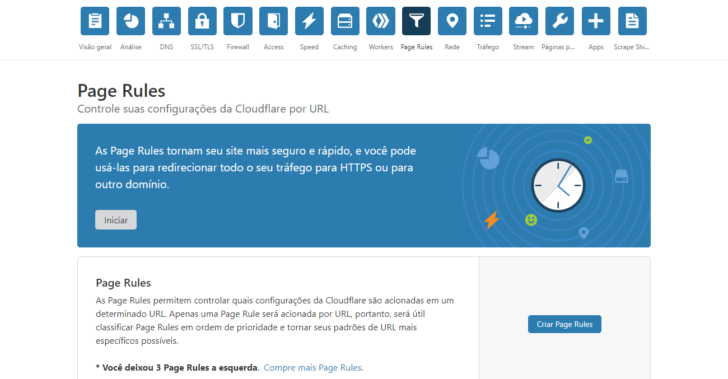
The Page Rules tab enables you to establish personalized rules for the website, such as configuring redirects and adjusting cache levels for specific pages, offering great utility in diverse scenarios.
How expensive is CloudFlare?
The service has four different options available, starting from free and going up to a tailored Business plan. The Pro plan is priced at $20 per month per domain, while the Business plan costs $200 per month per domain. The Corporate plan, designed for large companies, requires a customized pricing quote.
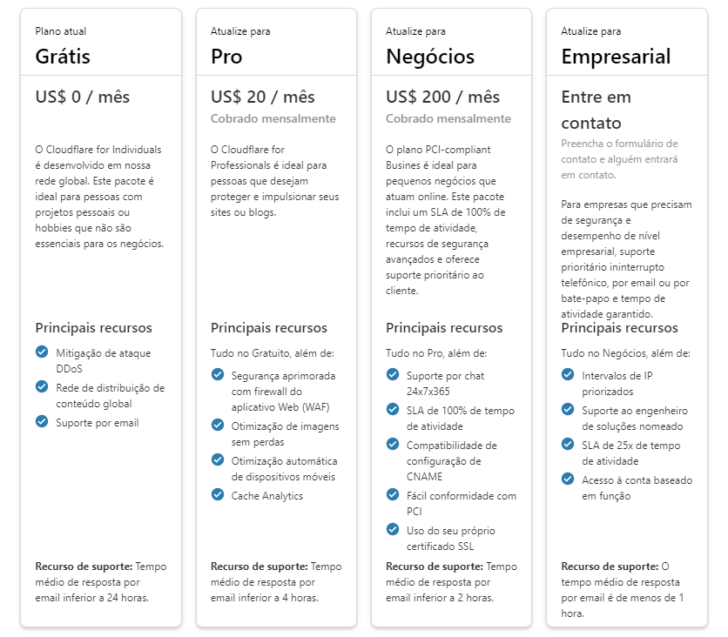
The complimentary plan offers defense against DDoS attacks, CDN services, SSL certification, and 3 page rules, alongside other features. It is a beneficial option for various websites, regardless of their visitor traffic.
The Pro plan, priced at US$ 20 per month, offers the features of the free plan along with a web application firewall (WAF), image optimization, mobile optimization, and 20 page rules.
The Business plan (US$ 200/month) offers all features of the Pro plan plus additional firewall protection for web applications (WAF) with customized rules, custom SSL certificate support, accelerated delivery of dynamic content (Railgun), prioritized email assistance, 50 rules (page rules), and other functionalities.
The Enterprise plan, which has no fixed price, offers all the features of the Business plan, with a strong emphasis on premium support through chat, email, and phone. It also includes a 100% availability guarantee with a refund Service Level Agreement (SLA), rules for 100 pages, dedicated support engineers, and various other features.
CloudFlare plans need to be purchased individually for each domain. This means that each site requires its own plan, even if adding multiple sites, each one needs its own plan.
To see all available plans and assess your resources, visit this page.
Conclusion
CloudFlare enhances internet performance and security for numerous websites globally. If you own a hosted website and wish to enjoy these advantages, you can easily sign up for a free account and begin utilizing the service promptly.
To learn about the advantages a cache system and a CDN can offer to your website, make sure to read the articles on cache and CDN.
Publication date: 13/07/2018 (latest update on 13/09/2023)
CloudFlare, Ideas