



There are more than 1 billion websites on the internet, encompassing a wide range of types and content reflecting world culture. Despite their diversity, they all share the common feature of being listed in Whois, which compiles information about domain owners.
Both João, a coxinha seller on the corner, and Bill Gates’ information can be found in Whois, which functions like a directory providing details like name, email, phone number, and address of domain registrants. For more insights on Whois, refer to the details outlined in this article.
What is the meaning of Whois?
Whois is a widely available protocol that discloses domain ownership information, functioning as a transmission control protocol (TCP). The term itself, “Whois,” is quite self-explanatory, as it reflects the desire to identify the owner of a domain.
Websites are created by individuals, businesses, and entities who require a domain, which is obtained through registration services offered by companies authorized by ICANN. The information gathered during registration is stored in the Whois database.
What details are visible in a Whois query?
The information sent to Whois for each registered domain includes the domain registration server data, the registrant’s name, email, address, and phone, as well as the administrative and technical contacts.
- The server name where the domain was registered, the DNS it is pointed to, and the domain status.
- the initial registration deadline.
- The information of the individuals who register the domain, the administrative contact, and the technical manager (including their names, email, phone number, and mailing address).
This is essentially a snippet of information that is displayed when you look up a URL in Whois.
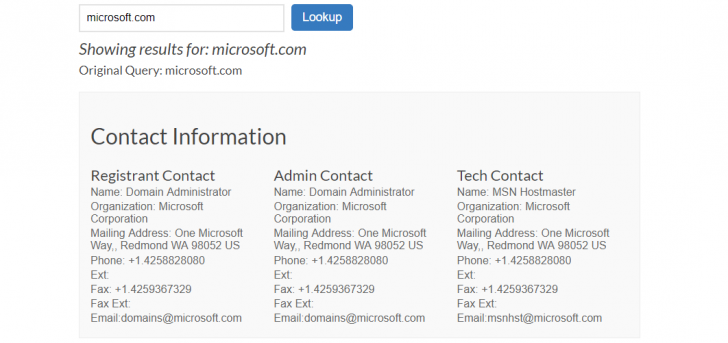
The requirements may differ according to the laws of each country. In Brazil, individuals registered on the Registry site .br are not required to disclose their phone number and address in Whois.
How to look up Whois information
Whois has a decentralized database without an official website for access. The ICANN website is among the platforms that provide the query, displaying a specific screen upon access.
chsyys/StockVault
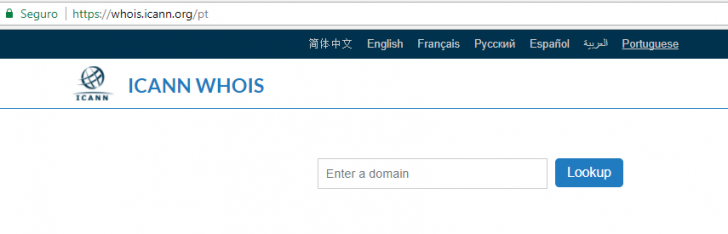
To conduct the search, simply input the domain for the desired information. All log data is readily available, with public and free access that does not necessitate a password or special permission.
What is the purpose of Whois?
The Whois originated in the early days of the internet, back when it was known as ARPANET. It was developed by the U.S. Department of Defense during the late 1960s to ensure secure communication that could withstand potential bombings. Over time, the system evolved with contributions from academia and industry, leading to the emergence of new tools and services. By 1982, the Whois directory service for ARPANET users had been established.
Initially, the system was only accessed by ARPANET users, but as the database expanded, it started receiving visitors from different entities for various purposes, ranging from crime investigation to resolving intellectual property matters. By the 1990s, with the popularization of Tim Berners-Lee’s WWW format and widespread internet access, Whois became firmly established. ICANN took over the maintenance of the Whois protocol in 1998, aiming to keep it as a public database with domain owner information accessible to all through a series of meetings and resolutions.
The controversies surrounding Whois.
The sharing of information through Whois sparks much debate regarding the privacy of website owners. Despite the controversy, public access has prevailed over privacy concerns in this ongoing discussion.
Data disclosure rules are very strict, requiring registration companies to send yearly reminders for domain owners to update their information on Whois. If inaccurate data is given, the domain will be frozen until the issue is fixed, as outlined in the domain registration agreement that users virtually sign when obtaining a domain.
In the midst of controversy, it is notable to mention a topic that led to the implementation of a new Whois restriction policy: prohibiting the use of email addresses listed there for marketing purposes. Starting in 2004, ICANN required individuals conducting research on Whois to agree not to utilize the data for commercial activities. Despite the inclusion of a notification about this restriction in all research, monitoring compliance has proven challenging, and ultimately, this regulation did not significantly impact domain owners’ lives.
Seeking answers
ICANN is aware of these concerns and is therefore implementing new protocols. A 2014 report highlighted the need to move away from the current practice of conducting research anonymously. The updated procedures will gather, verify, and release data only once it is confirmed that it will be used for approved purposes. Access to the data will be restricted to authorized individuals who agree to be accountable for any misuse. The timeline for these changes is currently unknown, as ICANN has indicated its commitment to this direction without providing a specific timeframe.
How to maintain confidentiality
Website owners may opt for domain privacy service to conceal their personal information on the internet, as an alternative to the lack of changes in international data disclosure regulations. The service replaces the owner’s personal details with the company data responsible for the registration. To learn more about domain privacy, refer to this article.
Any inquiries regarding the topic can be addressed by leaving a comment, as a friendly reminder.
Publication date: 18/01/2018 (revised on 20/04/2018)
Concepts are labelled using tags.